The Mallorca fixer who knows who signs the Sa Calobra closure — and when they’re on urlaub.
Luxury logistics, quietly. We file through the Consell de Mallorca Carreteres office for the Ma-2141 rolling closure, walk the Cap de Formentor permit pack into the Ajuntament de Pollença by hand, and call the Deià owners on the private numbers you won’t find online. Your crew lands at PMI on a Tuesday, the permit is already at the mayor’s desk, the van is already on the road. We’re based on Ibiza — a short hop away — and we run Mallorca on the same producer, the same contract.

Mallorca is three permit desks stacked on top of each other — a municipality, a UNESCO paratge, and a Consell road network — and the location on your moodboard needs all three signatures. The Conselleria de Medi Ambient clerk who co-signs Tramuntana closures also decides whether your drone over Cala Deià gets the nod. Sa Calobra opens for a rolling window between tourist buses; Valldemossa closes the plaza for its Chopin festival in August. Only a Spanish NIF holder can file the paperwork. We file it. We’re based in Ibiza — the sister island where the permit relationships and the finca library sit — and Mallorca is a short flight or ferry away, same producer, same contract.
What a Mallorca fixer covers
Permits — Consell, ajuntaments, Medi Ambient, Costas
Consell de Mallorca Carreteres (Ma-10, Ma-2141), ajuntaments of Palma, Calvià, Sóller, Valldemossa, Deià, Pollença, Ajuntament d’Escorca. Tramuntana UNESCO desk at Conselleria de Medi Ambient. Demarcación de Costas en Illes Balears for beach pulls. We file on the NIF, in person, and follow the signature all the way to the stamp. Typical lead: 14–21 working days for road closures; shorter for village or private-property permits.
Owner relations — Deià, Pollença, Valldemossa, Banyalbufar
Private finca owners who don’t have a website. The olive mill that only answers in Catalan. The Cala Deià boat captain who runs recces on a fourteen-footer. Door by door, coffee in hand, contracts bilingual. We don’t list owners on a public database and we don’t share their numbers between clients.
Island logistics — PMI handoff, ferry, Sóller tunnel, kit vans
Meet the crew at Palma de Mallorca (PMI), convoy via the Ma-11 through the Sóller tunnel — 2.8m van clearance, and we measure rather than guess. Sóller Port ferry to Sa Calobra when the Ma-2141 window shifts. Catering from Pollença farms. Talent transport run separately. One call sheet, nothing left to chance.
Spanish NIF, Balearic rebate, wrap paperwork
We invoice on our Spanish NIF so you don’t need to register a local entity. We prep the Balearic audiovisual rebate filing — the Balearic audiovisual incentive for productions executed in the Illes Balears — with receipts and payroll in the format the Consell de Mallorca audit requires, submitted at wrap. We work with a Palma-based tax counsel for the filing mechanics.
Drone, marine, closed road, helicopter
AESA operator registration on file for specific-category STS-ES and PDRA-ES03 scenarios, Palma CTR coordination, Demarcación de Costas en Illes Balears marine pulls, Consell road-closure sign-offs with Guardia Civil uniformed presence. We file the stack. Expect 6–8 weeks for a coastal drone pack; editorial-scale rush is sometimes possible.
Don’t see your service? Ask us →
Yacht charters out of Port de Sóller, helicopter pads at Son Bonet and Son Sant Joan, horse transport, first-light closed-beach access, Formentera day-trips from our Ibiza base. hola@lovely-cps.com
Recent work


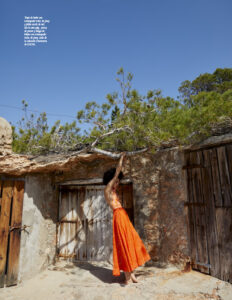





How we work
Dates, signers, NIF
We date-check the Tramuntana calendar, pull the right ajuntament lead times — Sóller 15 working days, Pollença 15 working days, Deià 10 working days, Ajuntament d’Escorca varies — and open the NIF-fronted application. Get your dates to us at T-21 or earlier and the permit file is already open when the crew boards.
Permit pack, owner holds
We walk the permit pack into the offices by hand, not email. Private owners get verbal holds turned into bilingual contracts. Insurance certificates issued. Kit manifest checked against the Sóller tunnel clearance at T-14 so there are no surprises on the road.
Recce reel, crew call, kit manifest
DP recce with owner-cleared access. Crew call sheet in EN/ES. Alt-locations held and pre-cleared. Final checks with Guardia Civil on any road-closure timing. If you want to change a location at T-3, we’ve already held the alt.
Rebate filing, owner thank-yous, close-out
Payroll in Illes Balears format, receipts filed against the Balearic rebate within 14 days of wrap. Owners get a thank-you. Production report and invoices to your AP desk in the format your accountant accepts. Receipts organised, nothing chased.
Mallorca — the permit landscape
Serra de Tramuntana at first light, the Ma-2141 switchbacks empty before the tourist buses. Deià’s olive groves above a cove that takes a boat to reach. Valldemossa shutters before noon. Sa Calobra — a short window, nobody else. Fornalutx, Banyalbufar, Cala Tuent. Ibiza is our home base; Mallorca is a short flight north, same producer, same call sheet.
| BEST LIGHT WINDOW | Golden hour 07:00–08:15 east face / 19:20–20:40 Deià coast (May–Oct) |
| NEAREST AIRPORT | Palma de Mallorca (PMI) — 45 min to Sóller, 70 min to Pollença |
| PERMIT LEAD TIME | 14–21 days (Consell / Tramuntana) · 9–15 days (ajuntament village) |
| LIBRARY SIZE | A door-knocked owner network across the Tramuntana corridor — Deià, Pollença, Valldemossa, Banyalbufar |
When a luxury campaign arrives in Mallorca, the brief typically lands with the DP and the stylist already locked — what’s missing is the local who knows that the mallorca fixer stack runs through three separate desks, not one. The Ajuntament handles the village, the Consell de Mallorca Carreteres handles the road, the Conselleria de Medi Ambient co-signs anything inside the Paratge Natural de la Serra de Tramuntana — and only a Spanish NIF holder can file any of it. Lovely CPS holds that NIF, does the walk-in, and makes the Saturday phone call. We’re based on Ibiza, where our Ibiza location library and permit relationships sit, and we run Mallorca on the same contract and the same producer as part of our full Mallorca production services whenever a brief calls for the Tramuntana look or the Sa Calobra road.
A working mallorca production fixer covers more than paperwork. Location access in Deià, Valldemossa and Banyalbufar runs on private-owner relationships — verbal first, contract second, bilingual because the mill owner doesn’t read English. Sa Calobra wants a rolling closure on the Ma-2141 coordinated with Guardia Civil. Cap de Formentor wants an Ajuntament de Pollença pack plus a Costas overlay for cliff pulls. Cala Deià wants a boat captain, not a road. Drone footage over the Tramuntana coast wants AESA STS-ES authorisation — the same permit-desk logic that drives our Ibiza film permits desk. We handle all of it, on one invoice, in one language to your production coordinator.
Mallorca sits inside a wider contract — fixer mallorca, Ibiza and Berlin under one producer, one set of receipts. The Ibiza producer who already knows your preferences runs your Mallorca leg too, alongside our Spain-wide fixer desk and, when a brief crosses north, our Berlin fixer desk. We prep the Balearic audiovisual rebate filing — the regional audiovisual incentive for productions executed in the Illes Balears — with receipts in the format the Consell audit requires. One contract. One coordinator. If you want the full-service view, see Spain Production Services or the dedicated Ibiza Production Services page.
Questions we get a lot
How early do we need to commit dates for Sa Calobra and the Tramuntana corridor?
Twenty-one working days is honest for a Sa Calobra rolling closure. We file the Ma-2141 request with Consell de Mallorca Carreteres, and the Ajuntament d’Escorca co-signs the village end. Fourteen working days is technically possible but only when the Conselleria de Medi Ambient inspector is in Palma and not on a Tramuntana site audit. August is the honest exception — Valldemossa and Deià are typically blocked by cultural calendars, so we push to late September for those locations.
What’s the reality on UNESCO and Paratge Natural Serra de Tramuntana restrictions?
UNESCO itself doesn’t issue permits — the Paratge Natural de la Serra de Tramuntana does, co-signed through the Conselleria de Medi Ambient i Territori. The restrictions that matter for fashion shoots are no ground disturbance, no pyrotechnics, no vehicles off marked tracks, limited generator windows in dry season (June–September), and an April–June bird-breeding overlay that restricts drone overflight in certain zones. We pre-clear per the shot list, not just per the location name.
How do AESA drone permits work above Mallorca, and can you file?
AESA is the Spanish civil-aviation authority and the municipal permit does not substitute it. For the Tramuntana coast we typically file a specific-category STS-ES or PDRA-ES03 authorisation, stacked with Palma CTR coordination if the flight is east of Sóller, and with Demarcación de Costas en Illes Balears if the flight crosses the maritime boundary. We operate on our own AESA operator registration. Expect 6–8 weeks for a coastal drone pack; editorial-scale rush is sometimes possible.
Boat access to Cala Deià — is it really the only way, and how does it work?
For a full crew with lighting, yes — the walk-down from Deià village is a narrow switchback, not a kit path. We work with Port de Sóller captains on small vessel charters for the crew, and a larger support boat for generator and grip. Sóller Port is the base; Cala Deià is roughly 35 minutes by sea. A fixer who tells you to just drive down hasn’t been there with a DIT cart.
PMI airport and kit handoff — how do you meet international crews?
We meet Terminal A at Palma de Mallorca (PMI), convoy via the Ma-11 through the Sóller tunnel — 2.8m clearance and we measure vans before booking. Kit arriving by ferry from Barcelona or Valencia (Trasmediterranea or Baleària) is collected at Palma port and convoyed up. PMI to Sóller is typically 45 minutes, PMI to Pollença around 70 minutes, PMI to Palma neighbourhoods around 25 minutes.
How does the Balearic audiovisual rebate work, and do you file it?
The Balearic audiovisual incentive applies to productions executed in the Illes Balears, capped per project. The spend has to flow through a Spanish entity — which is why a mallorca production fixer with a Spanish NIF and an Illes Balears registration matters. We invoice on our NIF, keep payroll and supplier receipts in the format the Consell de Mallorca audit requires, and work with a Palma-based tax counsel for the submission. Typical banking cycle from filing is in the region of 90–110 days.
Can you work with our existing DP, stylist and talent agency?
Yes — much of our work arrives with a fixed creative team already booked from London or New York and we plug into production only. We book local crew underneath, handle permits and logistics, and leave the creative untouched. If you have your own line producer, a lighter-touch fixer arrangement works fine too — we fill the gaps.
Private owner relationships in Deià and Pollença — how do you actually get access?
Door by door, over many years, with a coffee and a Sunday phone call. The Deià property circuit is small — a network of named relationships, most of them off the platforms. Pollença is broader but gatekept by a small number of local agents we’ve worked with consistently. We don’t list owners publicly, don’t share numbers between clients, and typically avoid using the same finca twice in one season. That’s how the owners continue to pick up.
Send us a brief
Tell us the dates. We’ll tell you what’s signable, what’s on urlaub, and what the Consell already knows about.
NDA on file by default. We don’t share moodboards or owner names between clients.